If you are shopping for waterfront property in Gulf Breeze, the view is only part of the story. Two homes can look similar online, but your ownership experience can feel very different once you factor in dock permits, water depth, flood risk, and insurance costs. This guide will help you focus on the details that matter most so you can buy with more confidence. Let’s dive in.
Why Gulf Breeze Waterfront Varies
Gulf Breeze sits on the Fairpoint Peninsula between Pensacola Bay and Santa Rosa Sound. The city reports about 18 miles of waterfront, plus three protected bayous, which means buyers can choose from several very different waterfront settings.
That geography matters because the waterbody often shapes how a property lives day to day. In practical terms, bayfront usually means more open-water exposure, soundfront is often somewhat more sheltered, and bayou or canal-style frontage is usually the most protected. Those are useful buying terms, even though they are not formal zoning categories.
For you as a buyer, this means the water can matter as much as the house. Exposure, tide movement, docking conditions, and shoreline upkeep can all change from one street or shoreline type to the next.
Start With the Waterbody
Before you fall in love with a dock or backyard, ask what kind of waterfront you are actually buying. A bayfront home may offer wide views and direct open-water appeal, while a bayou or canal-style property may offer more protection but raise more questions about depth, turning room, and ongoing maintenance.
Soundfront properties often sit somewhere in the middle. They are still coastal and tidal, but they may feel a little less exposed than bayfront locations.
This is one of the biggest reasons waterfront buying in Gulf Breeze needs a property-specific review. Photos rarely tell you enough about exposure, usability, or long-term carrying costs.
Check Docks and Seawalls Early
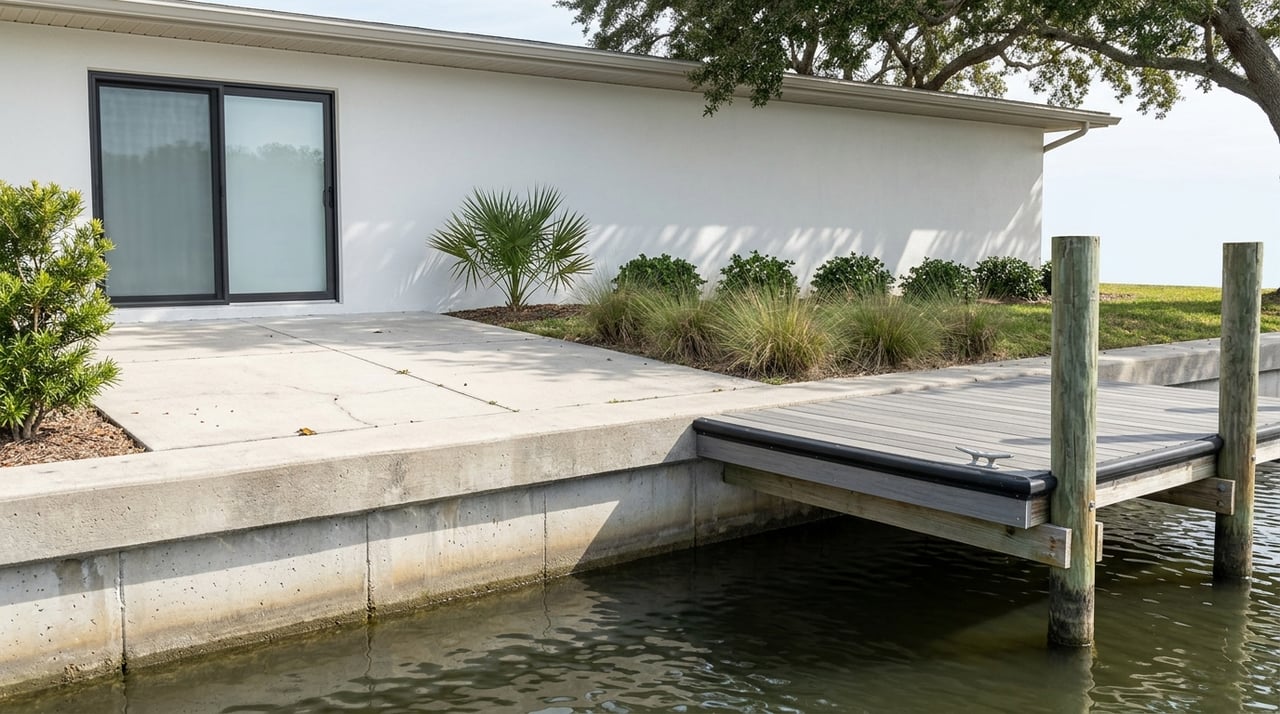
A dock, lift, seawall, or shoreline improvement can add real value, but only if it is legal, functional, and in good condition. In Santa Rosa County, zoning approval and a building permit are required before construction of docks, piers, boathouses, dolphin poles, retaining walls, and seawalls.
That means you should not assume an existing waterfront structure was properly approved just because it is already there. A dock can look simple from the street and still involve multiple layers of review.
At the state level, Florida DEP treats dock pilings and seawalls as dredge-and-fill activity when they are placed in wetlands or other surface waters. Some single-family dock projects may qualify for self-certification instead of a full permit, but separate authorization may still be needed for work on state-owned submerged lands.
Questions to ask about dock permits
- Is the dock or seawall permitted?
- Are permits or approval records available?
- Has the dock, lift, or seawall been repaired or replaced recently?
- Who completed the work?
- Does the structure sit in a shoreline-protection area or affect public access?
Understand Shoreline Work Options
Not every waterfront lot needs the same shoreline solution. Some properties may have a hard seawall, some may need one, and others may be better suited for a living shoreline approach.
Living shorelines use natural materials such as marsh vegetation, oysters, sand, and similar elements to help reduce erosion while also supporting habitat and water quality. In the right setting, that can be a lower-impact alternative to relying only on bulkheads, seawalls, or riprap.
For buyers, the key is not choosing a favorite option in advance. The key is understanding what is already in place, what condition it is in, and what type of future work may be allowed at that address.
Depth Matters More Than Buyers Expect
If you plan to keep a boat at home, water depth deserves serious attention. A beautiful dock is not very useful if your boat cannot clear the approach at low tide.
NOAA is the best source for depth and tide information. Nautical charts show soundings and aids to navigation, and chart depths are measured relative to tidal datums. Tide tools also provide predictions and real-time water levels, which can help you evaluate whether a channel, lift, or approach will be usable when the water is lower.
For Gulf Breeze buyers, a useful local reference point is NOAA’s Fishing Bend, Santa Rosa Sound tide station. Checking local tide predictions and current water levels can help you avoid costly assumptions about access.
Ask these boating questions
- What is your boat’s draft?
- What is the usable depth at low tide?
- Is the waterway maintained?
- Would dredging be needed for better access?
- Are there nearby bridge-clearance or turning-radius limits?
Be Careful With Dredging Assumptions
Some buyers assume they can fix a shallow approach later. In reality, dredging is a regulated project.
Florida DEP says dredging and filling in bays, bayous, sounds, and other surface waters is regulated, and state or federal review may be required before work begins. If a property seems almost right except for water depth, you should treat that as a major due-diligence item, not a simple future upgrade.
This is especially important on bayou and canal-style frontage. These protected settings can be appealing, but they are often the most sensitive to depth and maintenance questions.
Flood Zones and Evacuation Zones Are Different
Flood risk is one of the biggest sources of confusion for waterfront buyers. In Santa Rosa County, FEMA flood zones and evacuation zones are not the same thing.
Flood zones are used for National Flood Insurance Program purposes. Evacuation zones are used for storm surge planning and follow the county’s A through E system.
A property can be outside an evacuation zone and still sit in a flood zone. That is why address-level review matters so much when you are estimating monthly ownership costs.
Build Insurance Into Your Budget
Homeowners insurance usually does not cover flood. For homes in high-risk flood areas with government-backed or regulated mortgages, flood insurance is generally required.
Florida’s Office of Insurance Regulation says NFIP coverage is typically around $700 per year in high-risk areas, or about $58 per month, although actual pricing varies based on the property, provider, and proximity to flood zones. FEMA’s Risk Rating 2.0 also uses property-specific factors, which means two nearby homes may not price the same.
An elevation certificate can make a meaningful difference. Santa Rosa County keeps elevation certificates and related floodplain records on file, and those records can help you better understand both risk and potential insurance costs.
Key insurance questions before you offer
- What flood zone is the property in?
- What evacuation zone is it in?
- Is there an elevation certificate on file?
- What is the current flood insurance quote?
- Is the policy through NFIP or a private carrier?
- Has the property ever flooded?
- Has it ever been found substantially damaged?
Older Waterfront Homes Can Carry Extra Risk
Older homes often come with character, but they can also come with added compliance questions. Santa Rosa County notes that substantially damaged homes must be elevated to the regulatory flood level when repaired.
That can have a major impact on future repair costs after a storm or flood event. It can also affect how you compare one property to another, especially if both homes seem similarly priced at first glance.
When you are evaluating an older waterfront home, ask for as much floodplain history as possible. A lower purchase price may not mean lower total cost of ownership.
Look for Community Rating System Savings
Flood insurance pricing is not only about the home itself. Santa Rosa County says its participation in the Community Rating System can produce a 5% to 40% discount on flood insurance rates.
That makes CRS status another smart item to verify during due diligence. Even a modest discount can help when you are comparing long-term carrying costs across several waterfront options.
A Smart Gulf Breeze Waterfront Checklist
When you narrow down your options, keep your due diligence simple and focused. The goal is to understand the water, the structures, and the carrying costs before you write with confidence.
Your waterfront buying checklist
- Confirm whether the property is bayfront, soundfront, or bayou/canal-style frontage
- Review dock, seawall, and shoreline permit history
- Ask about repairs, replacements, and contractor records
- Check local tide data and usable depth for your actual boat
- Review flood zone and evacuation zone information
- Request the elevation certificate if available
- Ask for the current flood insurance quote and policy type
- Ask whether the property has ever flooded or been substantially damaged
- Verify whether CRS participation may affect flood insurance pricing
The Bottom Line for Gulf Breeze Buyers
In Gulf Breeze, the right waterfront home is not just about the prettiest lot or the longest dock. It is about how well the property matches the way you plan to live on the water.
The strongest buyers look past the photos and ask better questions. When you understand exposure, legality, depth, flood risk, and insurance before you commit, you put yourself in a much better position to buy the right property the first time.
If you want local guidance as you compare waterfront options in Gulf Breeze, Avenue Realty can help you evaluate the details behind the view and move forward with clarity.
FAQs
What should you check first when buying Gulf Breeze waterfront property?
- Start by identifying the type of waterfront you are buying, such as bayfront, soundfront, or bayou/canal-style frontage, because that affects exposure, depth, dock usability, and maintenance.
What permits matter for Gulf Breeze docks and seawalls?
- In Santa Rosa County, zoning approval and a building permit are required before construction of docks, piers, boathouses, dolphin poles, retaining walls, and seawalls.
What tide source should Gulf Breeze boaters review?
- A useful local reference point is NOAA’s Fishing Bend, Santa Rosa Sound tide station, which can help you check tide predictions and real-time water levels.
What is the difference between a flood zone and an evacuation zone in Santa Rosa County?
- Flood zones are used for flood insurance purposes, while evacuation zones are used for storm surge planning, so a home can be outside an evacuation zone and still be in a flood zone.
How much can flood insurance cost for a Gulf Breeze waterfront home?
- Florida’s Office of Insurance Regulation says NFIP coverage is typically around $700 per year in high-risk areas, or about $58 per month, though actual pricing varies by property and provider.