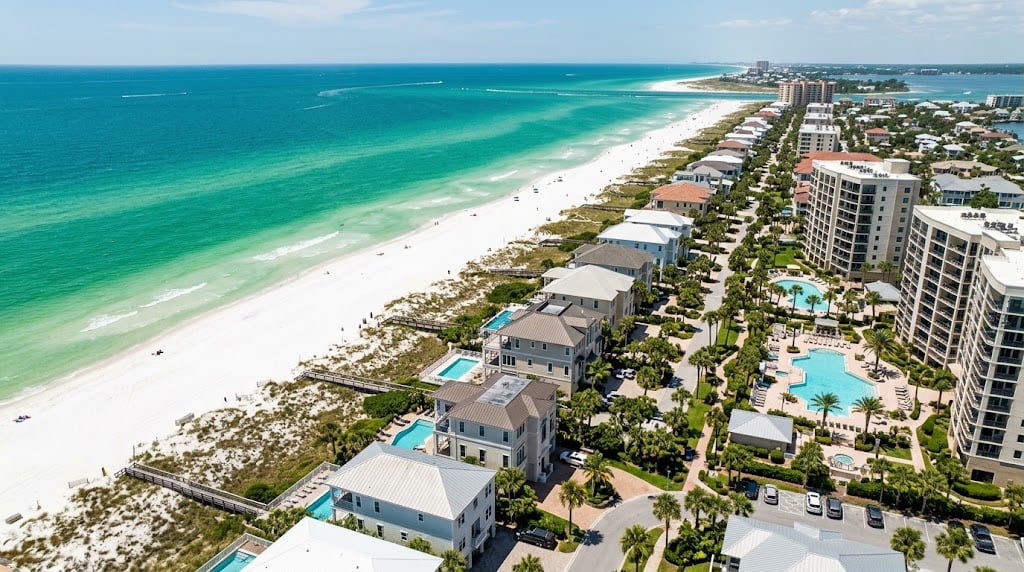
Citizens Property Insurance stopped binding new coverage across Florida at 11:05 a.m. ET on October 7, as Isaias approached. It started binding again at 5 a.m. ET on October 10, the morning after the storm came ashore near Destin as a Category 2. That pause covered less than three days.
Pensacola deals that were already under contract are still dealing with the storm. Downed trees, damaged fences and roof patches now go through a few lines of the standard Florida contract, and those lines set dollar limits that most buyers and sellers never read until a hurricane makes them matter. Two more questions sit beside the contract. The mortgage lender decides whether the house needs another look, and the federal declaration still hasn't caught up with the damage.
Most of the dispute is over a figure set before the storm
The Florida Realtors/Florida Bar "AS IS" Residential Contract, Section 18(M), deals with damage that happens after the contract's effective date and before closing. If restoration costs no more than 1.5% of the purchase price, the seller pays and the closing goes ahead on the contract's terms. If the work isn't done by closing, 125% of the estimated cost goes into escrow, capped at 1.5% of the price. If restoration costs more than 1.5%, the buyer picks one of two options. The buyer can take the property "as is" plus the 1.5%, or get the deposit back and end the contract.
These terms are still in force. Florida Realtors released a revised form, ASIS-7x, on February 27, 2026. That update changed the FinCEN reporting language, and the redlined 2026 contract carries the same risk-of-loss wording as the 2024 version.
The amounts are smaller than many sellers expect. These are sample purchase prices, worked through the clause:
| Purchase price | Seller's restoration cap (1.5%) | Example estimate | Escrow at 125%, capped |
|---|---|---|---|
| $300,000 | $4,500 | $3,000 | $3,750 |
| $300,000 | $4,500 | $4,000 | $4,500, because 125% would be $5,000 |
| $450,000 | $6,750 | $5,000 | $6,250 |
| $650,000 | $9,750 | $9,000 | $9,750, because 125% would be $11,250 |
A new fence and a few roof repairs can push a $300,000 house over its cap. Once that happens, the next step belongs to the buyer. Under the contract, the seller can't make up the shortfall and keep the deal on its original terms.
Why trees matter more than usual this time
Section 18(M) counts "pruning or removing damaged trees" as part of restoration. It also says that for tree damage from a casualty or other natural occurrence, the seller's only obligation is the cost of pruning or removal. A large oak that has to come out uses up the 1.5% the same way a roof repair does. The seller doesn't owe a replacement tree or the shade that went with it.
Pensacola has a lot of tree damage after this storm. As of October 19, the City had hauled 3,236 loads of vegetative debris. Its contractor, D&J, estimated that the city could produce as much as 1 million cubic yards of debris in total. The City expects the first collection pass to take four to five weeks, with at least two passes planned. Collected debris is being stored for now at Roger Scott and Goya Drive. In unincorporated Escambia County, contractors had removed about 330,000 cubic yards by October 20, and the county is collecting only storm debris placed on the public right-of-way.
That timeline matters for a closing. A limb pile at the curb could still be there on closing day. A tree that's half down and still in the yard is a removal cost, and it counts against the cap. Pensacola had documented more than $71 million in damage to personal property inside city limits as of October 16, so many contracts will need someone to get these estimates.
Section 18(L) gives buyers a way to see the property again. It requires the seller, with reasonable notice, to provide utilities and access for appraisals and inspections, including a walk-through or follow-up walk-through before closing. In its hurricane clause overview, Florida Realtors says this clause "generally favors" a buyer who wants another look after a storm, even if the inspection period has ended.
The force majeure extension is limited
Section 18(G) treats hurricanes as force majeure. When it applies, deadlines including the closing date move back for a reasonable time, up to 7 days after the event stops preventing performance. If force majeure keeps blocking performance for more than 30 days past the closing date, either party can end the contract with written notice. The 2026 form keeps both time limits.
The contract's wording ties the extension to the date the event stops preventing performance, not to the landfall date. Citizens resumed binding on October 10, while power outages and boil-water notices lasted for days afterward in parts of Escambia and Santa Rosa counties, according to the Pensacola News Journal. When force majeure ends for a particular contract, and whether a damage question belongs under 18(G) or 18(M), is for the parties and their attorneys to settle based on the facts of that deal.
The lender decides whether the house needs another look
Before the loan closes, the lender has to be comfortable with the property's condition. Federal rules don't require a set storm inspection, and each agency handles this differently.
- Fannie Mae. Its Selling Guide section on disaster-affected properties says the lender must take "prudent and reasonable actions" to find out whether the property's condition may have materially changed, and that the lender decides whether an inspection or a new appraisal is needed. Damage that doesn't affect safety or structure and is covered by insurance can go forward if repair estimates are documented and funds are set aside. Damage that's uninsured, or that affects safety or structure, has to be repaired before the loan is delivered.
- Freddie Mac. Freddie doesn't prescribe documentation for disaster-impacted properties. The lender's own policies have to support its warranties.
- FHA. HUD Mortgagee Letter 2025-19, dated June 27, 2025, rescinded the blanket rule that required a damage inspection before endorsement in Presidentially Declared Major Disaster Areas. FHA now leaves inspection and repair scope to the lender's risk judgment, while still requiring reasonable due diligence.
So two Pensacola buyers with damage on the same street can face different requirements before closing, because their lenders apply different policies. The insured-versus-uninsured line in Fannie Mae's guide also links back to the contract. A seller's insurance claim affects both how 18(M) plays out and whether the buyer's loan can close with repairs still open.
The federal declaration is still being decided
The only Isaias declaration listed on FEMA's disaster page is emergency declaration EM-3655-FL, dated October 9. Its designated-areas listing shows Individual Assistance as "None," with Escambia and Santa Rosa listed for Public Assistance. As NewsRadio 92.3 reported, Public Assistance reimburses eligible government costs such as debris removal, and Escambia qualifying for it doesn't mean aid has been approved for individual homeowners.
On October 16, the governor's office announced that Florida had asked for a presidential major disaster declaration. The request includes Individual Assistance for residents of eight counties, Escambia among them, and the state said it was waiting for federal approval. If the declaration is approved, it will appear on FEMA's site. For a seller, any Individual Assistance would add to the money available for repairs. It wouldn't change the 1.5% cap.
Quick answers
Is Citizens binding new policies now? Yes. Citizens lifted its suspension at 5 a.m. ET on October 10 and said regular operations had resumed. Its notice applied to Citizens policies only.
Does a federal disaster declaration automatically mean an FHA re-inspection? No. HUD's 2025 mortgagee letter removed that automatic requirement and leaves the decision to the lender.
Does the tree clause cover replacing a lost tree? The contract limits the seller's tree obligation to the cost of pruning or removal.
This post is general information, not legal, financial or insurance advice. Your contract, lender and policy will each have specifics, so confirm how they apply with your attorney, loan officer and insurance agent.
If your Pensacola sale was under contract when Isaias came through, our team at Avenue Realty can help you collect the repair and tree-removal estimates, schedule follow-up walk-throughs and keep everyone on the same timeline through closing. Schedule a Free Home Consultation and we'll go over where your deal stands.