Gulf Coast property investment rewards patient buyers with strong rental demand and steady appreciation. Our market spans vacation condos like Panama City Beach's 8727 Thomas Drive unit, sold at competitive prices, alongside Gulf Breeze homes reaching significant values. Avenue Realty guides investors through these opportunities, matching each property to specific yield and growth goals.
Key Takeaways
- Tourism tied to Pensacola, Destin, and Panama City Beach sustains year-round rental demand on Florida's Gulf Coast beyond summer peaks.
- Vacation rentals outperform long-term leases on gross revenue but require higher management intensity and furnishing costs.
- Condominiums with minimum rental policies of two weeks or less attract the strongest investor interest in established vacation communities.
- Northwest Florida submarkets like Destin, Perdido Key, and Navarre offer different renter demographics and entry price points for investors.
Why Invest in Florida's Gulf Coast Properties?
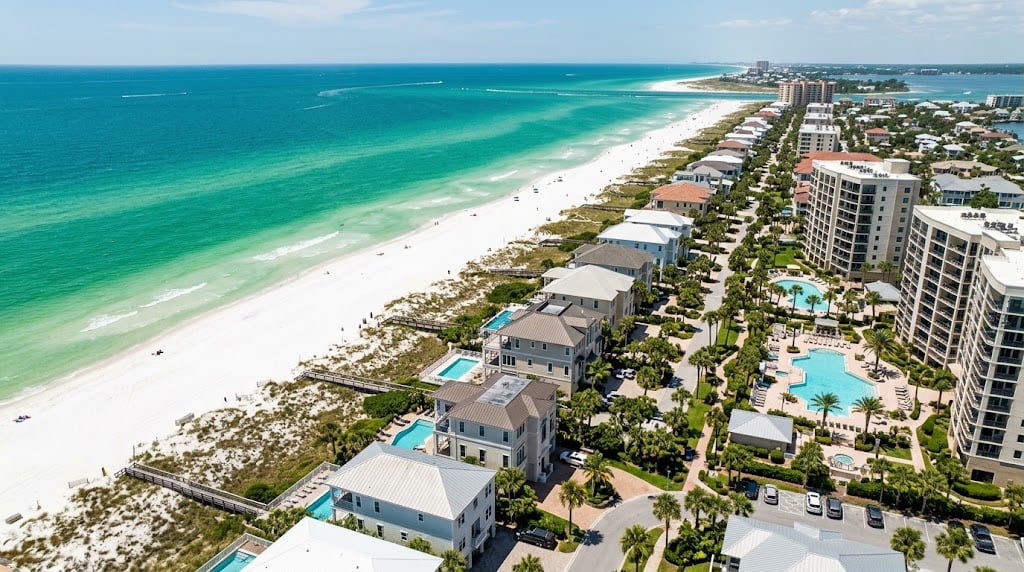
The Gulf Coast draws consistent visitor traffic that creates steady demand for rental properties. This tourism volume translates directly into occupancy rates and rental income for investors who position properties in high-traffic coastal communities.
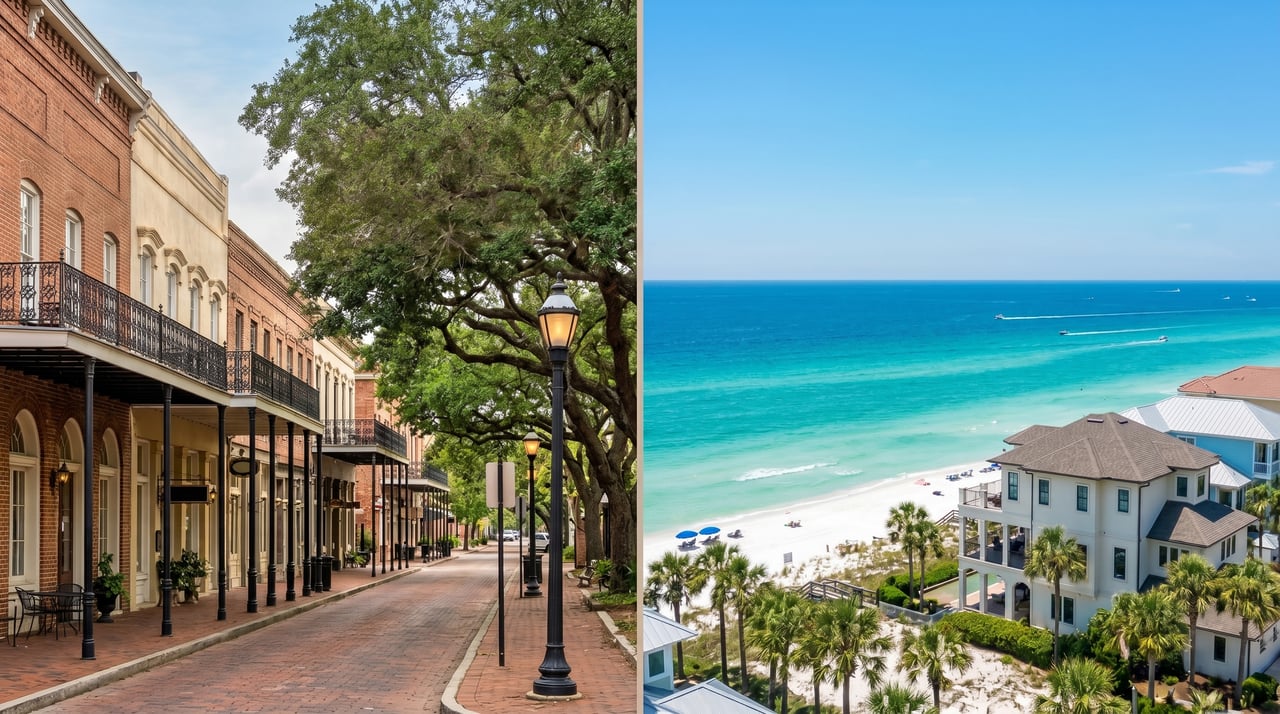
How to Invest in Gulf Coast Properties starts with understanding what drives returns here. Tourism fuels the engine. Attractions like Pensacola Beach, the Gulf Islands National Seashore, and the shops and dining along 30A pull visitors year-round, not just during summer peaks. That sustained traffic supports both short-term vacation rentals and long-term residential leases.
What types of properties can investors buy on the Florida's Gulf Coast?
Investors access a broad mix of property types across Florida's Gulf Coast market. Single-family homes, condominiums, waterfront properties, and new construction all appear in active listings throughout Northwest Florida's coastal communities. Each category serves a different investment strategy. Condominiums near beach access points attract vacation renters seeking walkable amenities. Single-family homes in established neighborhoods draw families and long-term tenants. Waterfront properties command premium nightly rates during peak seasons.
Is the Florida's Gulf Coast market only for residential investors?
Commercial investment opportunities exist alongside residential options. The region's growing economy supports retail spaces, mixed-use developments, and hospitality properties. Avenue Realty assists with a range of property types, including single-family homes, condominiums, waterfront properties, land, new construction, and investment properties, depending on current market availability. Investors who diversify across property types reduce exposure to seasonal fluctuations in any single segment.
For those exploring specific communities, Gulf Breeze real estate offers waterfront estates and family homes with strong appreciation potential. Avenue Realty helps investors evaluate properties based on rental history, location, and projected returns rather than emotional appeal.
Long-Term Rentals or Vacation Rentals?
The choice between long-term and vacation rentals shapes every Gulf Coast investment strategy. How to Invest in Gulf Coast Properties successfully starts with matching the rental model to your financial goals and management tolerance. Beachfront short-term rentals generate higher nightly rates and stronger occupancy during peak seasons, while long-term leases deliver predictable monthly income with fewer turnover costs.
What rental strategy produces the highest income on the Florida's Gulf Coast?
Vacation rentals typically outperform long-term leases on gross revenue. Investors gravitate toward beachfront condos with short-term rental policies because these properties command premium nightly rates and fill consistently during tourist season. The tradeoff is real: higher management intensity, seasonal gaps, and furnishing costs eat into that top-line number.
Which property type works best for short-term Florida's Gulf Coast rentals?
Condominiums with minimum rental policies of two weeks or less attract the strongest investor interest. These units sit in established vacation communities where rental demand is already proven. A beachfront condo with a flexible rental policy gives you the pricing power to capture both summer premiums and shoulder-season bookings.
Factor | Long-Term Rental | Vacation Rental |
|---|---|---|
Income pattern | Steady monthly cash flow | Seasonal peaks with higher gross potential |
Management load | Low; annual lease cycles | High; guest turnover and marketing |
Occupancy risk | Vacancy between tenants | Off-season gaps |
Furnishing requirement | Minimal | Full furnishing and upkeep |
Some investors prefer to let a Gulf Coast property manager handle everything it takes to maintain profitable rental properties. That approach works for either model. A professional manager screens long-term tenants, coordinates maintenance, and enforces lease terms. For vacation rentals, the same manager handles bookings, cleaning, and guest communication. The right choice depends on whether you want hands-off income or are willing to trade time for higher returns. Our team at Avenue Realty walks through both scenarios before you commit, because the wrong structure costs you months of lost revenue.
Which Florida's Gulf Coast Submarkets Should You Compare?
Comparing Florida Gulf Coast submarkets reveals distinct investment profiles shaped by tourism patterns, property types, and rental demand. The Pensacola area, Gulf Breeze, Navarre, Perdido Key, and the Destin/30A corridor each offer different entry points and return characteristics for real estate investors.
How to Invest in Gulf Coast Properties starts with understanding these geographic differences within Northwest Florida. Sustained visitor traffic keeps vacation rental inventory in demand from Pensacola Beach to Destin. That volume supports year-round occupancy that seasonal-only markets cannot match.
What Makes Northwest Florida's Gulf Coast Submarket Different?
Northwest Florida spans multiple communities with varying investment profiles. Avenue Realty serves investors across Pensacola, Pensacola Beach, Gulf Breeze, Perdido Key, Navarre, and Destin. Each community attracts different renter demographics. Destin draws families seeking resort amenities. Perdido Key appeals to buyers wanting quieter beach access. Navarre offers lower entry prices than Destin while capturing spillover demand.
The tradeoff is straightforward. Higher-priced waterfront condos in Destin generate stronger nightly rates. Lower-cost properties in Navarre or Gulf Breeze produce competitive cap rates with less capital at risk. Our team helps investors model both scenarios before committing.
How Does Pensacola Compare for Rental Investors?
Pensacola and Pensacola Beach offer a different entry point than the Destin corridor. The area benefits from a mix of year-round residents, military-connected renters, and beach tourism, which gives investors more flexibility between long-term and vacation rental strategies. Condos with minimum rental policies of two weeks or less tend to generate higher occupancy and stronger revenue, a pattern we see repeated across short-term rental markets.
The investor profile here skews toward buyers who want beach access without Destin's price premiums. Inventory turns over quickly in peak season, so having financing pre-approved before touring properties becomes essential.
Submarket | Primary Demand Driver | Property Types |
|---|---|---|
Destin / 30A | Family vacations, resort amenities | Condos, single-family, Gulf-front homes |
Pensacola / Pensacola Beach | Year-round residents, beach tourism | Single-family homes, condos, waterfront properties |
Perdido Key / Navarre / Gulf Breeze | Value-seeking tourists, quieter beach access | Condos, single-family homes |
Our analysis of Gulf Coast property positioning shows how location within a single market changes rental performance. The same principle applies across submarkets. A Gulf-front condo in Destin performs differently than a sound-side home in Navarre, and both differ from a property closer to Pensacola's urban core. We evaluate each property against local comps and seasonal demand curves rather than applying one formula across the entire region.
What Should You Look for in a Rental Property?
Finding the right Gulf Coast investment property demands consistent effort and attention to daily management tasks. A property that looks profitable on paper still requires hands-on oversight to deliver reliable returns year after year.
What Makes a Gulf Coast Rental Property a Strong Investment?
We evaluate three core factors before recommending any property. Location drives occupancy rates. Property condition determines maintenance costs and renter satisfaction. Rental history reveals actual income performance rather than projected numbers.
How to invest in Gulf Coast properties starts with understanding what renters in this market actually want. Beach proximity matters. So do practical features like parking, storage, and hurricane-resistant construction. Properties lacking these elements sit vacant longer and erode your annual yield.
How Do You Balance Rental Income Against Management Demands?
Managing renters and staying consistent year after year takes real work. We see investors underestimate this burden constantly. A property generating strong gross revenue still fails if management headaches consume your time and profit margin.
Building long-term wealth with a healthy real estate portfolio supports retirement goals when managed consistently. The properties that perform best combine strong location fundamentals with a management plan you can sustain. Some investors handle daily tasks themselves. Others factor professional management costs into their acquisition math from day one.
Our REALTORS® provide personalized guidance based on each client's real estate goals and preferred location. We help you match properties to your capacity for hands-on involvement. Choosing the right real estate partner means working with someone who understands both the numbers and the daily reality of Gulf Coast rental ownership. Avenue Realty brings that dual perspective to every investor conversation.
Investor Due Diligence on the Gulf Coast
Before placing an offer on a coastal rental, make sure your financial modeling accounts for regional operational costs.
- Condo reserve studies (Florida): For Florida condo investments, verify whether the HOA has completed its required Structural Integrity Reserve Study (SIRS) to avoid unexpected special assessments.
- Insurance adjustments: Model real quotes for windstorm, hurricane, and flood insurance into your net cash flow projections, rather than relying on national averages.
- Local STR permitting: Check local municipality rules for short-term rental licensing, parking rules, and occupancy caps, especially in Destin, Pensacola Beach, and Panama City Beach.
How Do You Start Your Gulf Coast Investment Plan?
A clear investment plan starts with understanding local market conditions and your own financial goals. How to Invest in Gulf Coast Properties begins with research, not rushed decisions. Without a structured approach, investors lose time chasing properties that do not match their rental income targets or long-term appreciation potential.
We guide investors through a step-by-step process that removes guesswork. Our team combines local Gulf Coast market knowledge with personalized guidance for buyers, sellers, and investors. This means we help you evaluate neighborhoods, property types, and pricing trends before you commit capital.
What tools help investors evaluate Gulf Coast properties?
Our website lets clients search available properties and explore local communities in one place. You can filter by location, property type, and price range to narrow options quickly. This research phase builds the foundation for every smart investment decision.
How do you estimate a property's investment potential?
Homeowners and investors use our Home Valuation tool to receive an initial estimate of a property's potential market value. The tool provides a data-driven starting point for analyzing rental yields and resale projections. We then layer in local market insights to refine those numbers.
- Search properties by community, price, and type
- Estimate value with the Home Valuation tool
- Review local data with an agent who knows Gulf Coast submarkets
Avenue Realty helps clients move from broad interest to targeted action. Skipping these early steps leads to overpaying or missing better opportunities in fast-moving coastal markets.
Frequently Asked Questions
What types of properties can investors buy on the Gulf Coast?
Investors access single-family homes, condominiums, waterfront properties, land, new construction, and investment properties. Each category serves a different strategy, from vacation condos near beach access to family homes in established neighborhoods.
Should I choose long-term rentals or vacation rentals?
Beachfront short-term rentals generate higher nightly rates and stronger occupancy during peak seasons.
Is the Gulf Coast market only for residential investors?
Commercial investment opportunities exist alongside residential options, including retail spaces and hospitality properties. Diversifying across property types reduces exposure to seasonal fluctuations in any single segment.
What insurance costs should I plan for on a Gulf Coast rental property?
Budget for windstorm, hurricane, and flood coverage separately from a standard policy, and get real local quotes rather than relying on national averages. These costs vary significantly by county and proximity to the water, so they belong in your net cash flow projections from the start.
Do I need financing pre-approved before touring Gulf Coast investment properties?
Yes. Inventory in popular submarkets like Destin and Pensacola Beach turns over quickly during peak season, and having financing pre-approved lets you move on a strong listing before another investor does.