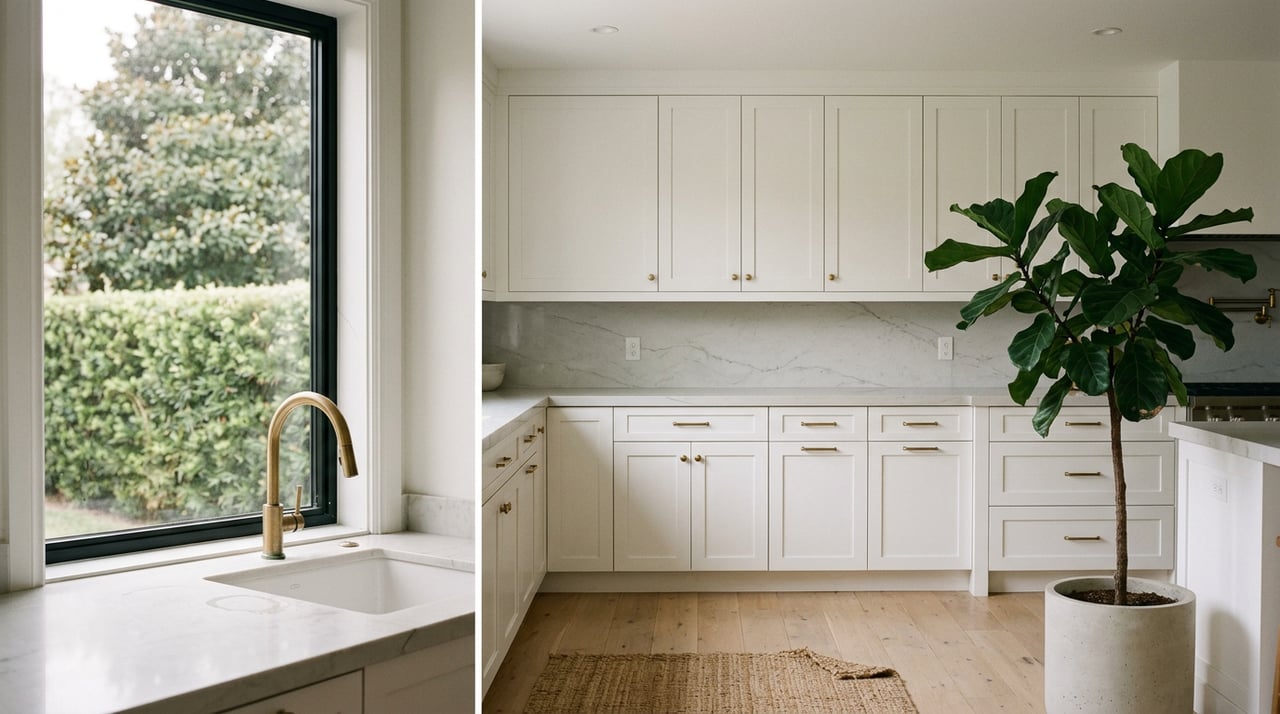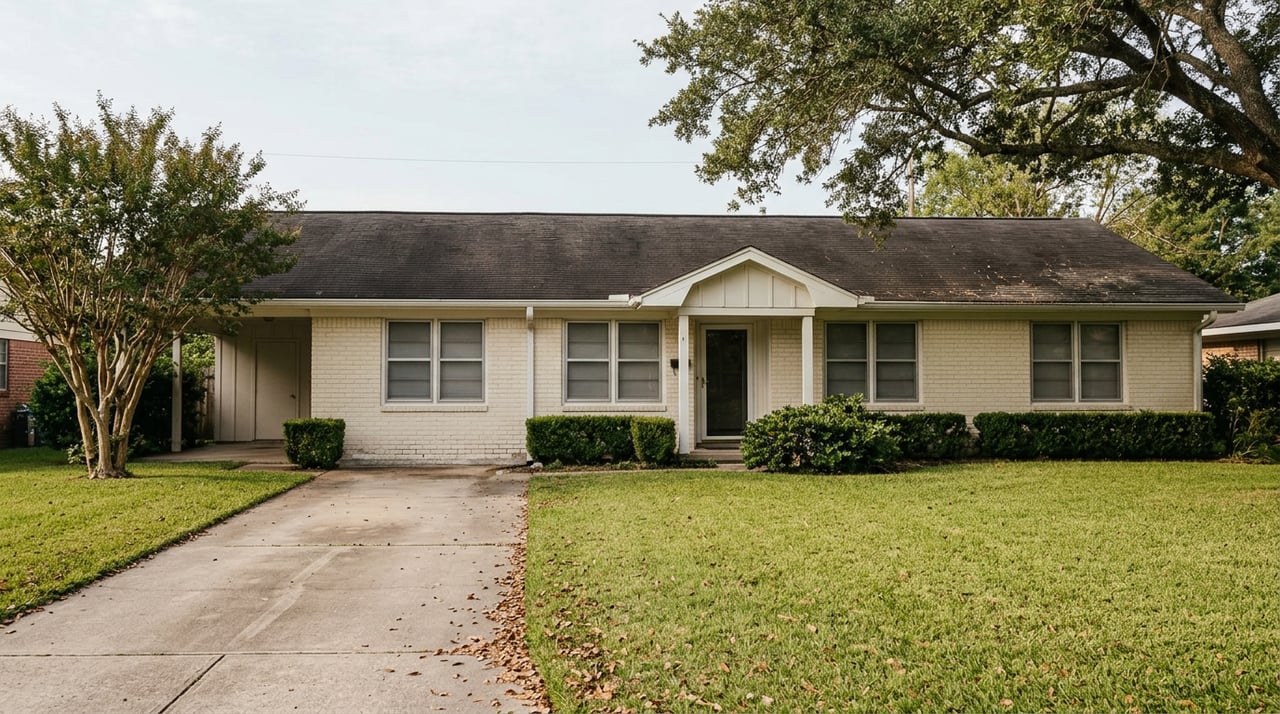
A buyer looking at a listing in Cordova Park almost always does the same thing first. They pull the address, check the flood zone designation, see an X, and move on to the kitchen photos. Zone X means low to moderate risk. It usually means no federal flood insurance requirement. It feels like a green light.
That green light is answering a different question than the one the buyer thinks they're asking. The FEMA zone letter tells you about storm surge risk, the kind of flooding that comes off Pensacola Bay when a hurricane pushes water inland. It does not fully capture the kind of flooding that has actually put water in Cordova Park living rooms: rain that falls faster than the neighborhood's watershed can carry it away, backing up Carpenter Creek until it spills into Bayou Texar and out onto the streets around it.
That distinction matters more in Cordova Park than in most Pensacola neighborhoods, because Cordova Park sits directly against the water most responsible for it.
Two Kinds of Flooding, One Zone Letter
Cordova Park's eastern edge runs along Bayou Texar, the estuary that separates the neighborhood from East Hill and East Pensacola Heights. The bayou is fed by Carpenter Creek, which starts north of Interstate 10 near Olive Road and flows about four and a half miles southeast before widening into the bayou itself. Homes along Bayou Boulevard back right up to that water, and public adjusters who work storm claims across the city have flagged Cordova Park by name, alongside East Pensacola Heights and other Bayou Texar-adjacent areas, as particularly exposed to both storm surge and separate freshwater flooding.
Those are two different mechanisms, and Florida homeowners insurance treats them as two different products. A standard HO-3 policy covers water damage that comes from above or from a sudden event inside the home: a roof failure during a storm, a burst pipe, rain blown in through a broken window. It does not cover flood damage, defined as water that rises from the ground up, whether that's storm surge, an overflowing creek or bayou, or rising groundwater. That kind of coverage has to come from a separate policy, typically through the National Flood Insurance Program or a private flood carrier.
Here's where the zone letter creates a false sense of security. If a Cordova Park property sits in Zone X, a lender won't require flood insurance on a federally backed mortgage. Many buyers read that as permission to skip it. But Zone X measures the odds of storm surge and mapped floodplain overflow, not the odds of Carpenter Creek backing up during a stalled rain event. Those are exactly the conditions that hit this part of Pensacola hardest during Hurricane Sally.
What Actually Flooded in 2020
Sally made landfall near Gulf Shores in September 2020, and the storm surge along Pensacola Bay was, by hurricane standards, unremarkable: three to five feet. What was not unremarkable was the rain. Sally stalled over the Panhandle and dropped record totals, overwhelming stormwater systems and causing Carpenter Creek and other inland waterways to overflow. Homes that flooded were not necessarily the ones closest to the bay. Many were homes whose owners had never considered themselves to be in a flood zone at all, because the water that reached their living rooms didn't come from the coast. It came from the creek.
That pattern lines up with how the Bayou Texar watershed is built. The subwatershed covering Carpenter Creek and Bayou Texar spans roughly 5,350 acres, and by the most recent accounting, about 90 percent of that watershed is developed. Cordova Park itself grew up in that same window: Sacred Heart Hospital relocated into the basin in 1965, Cordova Mall opened in 1971, and the 9th Avenue commercial corridor was largely built out by 1976. Most Cordova Park homes date to the same era, with a median construction year around 1974. The neighborhood and the pavement around it were built together, decades before modern stormwater codes existed to slow down what all that impervious surface sends toward the creek.
None of that shows up on a flood zone map. It shows up in what happens when six or eight inches of rain falls in a day and the creek has nowhere to put it.
The Coverage Gap in Plain Terms
For a buyer or seller trying to price risk correctly, the practical question isn't "what zone am I in." It's "which policy actually pays if water comes in, and from which direction."
| Scenario | Typical coverage |
|---|---|
| Roof damage lets rain into the attic during a storm | Standard HO-3 homeowners policy |
| Wind blows a window open and rain comes in | Standard HO-3 homeowners policy |
| A pipe bursts inside the home | Standard HO-3 homeowners policy |
| Bayou Texar or Carpenter Creek overflows onto the property | Separate flood policy (NFIP or private), not standard HO-3 |
| Storm surge pushes water in from the bay | Separate flood policy (NFIP or private), not standard HO-3 |
| Groundwater rises after saturated soil can't absorb more rain | Separate flood policy (NFIP or private), not standard HO-3 |
A homeowner in Cordova Park can carry a well-rated HO-3 policy and still have no coverage at all for the exact scenario the neighborhood is most exposed to. That gap is worth surfacing before an offer goes in, not after a claim gets denied.
It's also not a Cordova Park-only problem, though the neighborhood's geography makes it more relevant here than most. Nationally, close to a third of National Flood Insurance Program claims filed between 2014 and 2024 came from outside federally designated high-risk zones. Low risk on a map is not no risk on the ground.
What the City Is Actually Doing About It
Pensacola has been working on Bayou Texar's water for years, and it's worth being precise about which projects addressed which problem. A project completed at the Bayou Boulevard, Perry, Blount, and Avery outfalls added underground stormwater treatment units at three drainage sub-basins that previously dumped untreated runoff straight into the bayou. A separate, federally funded effort, the Carpenter Creek Bayou Texar Outfalls Project, brought $5.95 million in RESTORE Act funding to install five stormwater treatment measures at Gadsden Street, East and West Gonzalez Street, Cove Road, and Hyde Park, treating runoff from about 40 acres of the watershed. Both were aimed at water quality, filtering out sediment, trash, oil, and grease before it reaches the bayou.
Neither project was designed to change how much water the watershed can move during a rain event like Sally. That is a different, newer effort. The city has begun early planning for a Bayou Texar Stormwater Improvement Project focused on stormwater management and drainage more broadly, but as of this writing it has not entered the design phase. The city is still gathering resident feedback and hasn't published a timeline or a construction plan.
For a Cordova Park buyer, that means the honest answer right now is that nothing has changed yet. The neighborhood's exposure to inland flooding during heavy rain is the same today as it was in 2020, and any real capacity improvement is still in the planning stage rather than in the ground.
What This Means Before You Write an Offer
If you're buying in Cordova Park, especially anywhere within a few blocks of Bayou Texar or in the older brick ranch stock closer to Summit Boulevard, a few questions are worth settling before you're under contract rather than after closing.
- Ask for the elevation certificate if one exists, not just the zone letter.
- Ask your insurance agent to quote flood coverage regardless of the FEMA zone, and get that number in writing before your inspection period ends.
- Ask the seller directly whether the property has ever taken on water during a rain event, separate from any storm surge claim history.
- If you're selling, disclose what you know. A buyer who finds out about prior water intrusion after closing is a buyer who calls a lawyer, not an inspector.
None of this means Cordova Park is a bad place to buy. It means the flood zone letter is one data point, not the whole picture, and the neighborhood's history with Carpenter Creek is the kind of local knowledge that doesn't show up until you ask the right question.
If you're weighing a purchase in Cordova Park, or you're a current owner trying to price a sale accurately given what the neighborhood has actually experienced, Avenue Realty can walk through the specific parcel with you before you're locked into a contract. Schedule a Free Home Consultation and we'll go through the flood history, the insurance math, and what it actually means for your offer.
A Few Questions Worth Asking Early
Does a Zone X designation mean I don't need flood insurance in Cordova Park? It means a lender won't require it on a federally backed mortgage. It doesn't mean the risk is zero, particularly this close to Bayou Texar and Carpenter Creek, where the flooding history involves rainfall overwhelming the creek rather than storm surge alone.
Will the new city stormwater project fix the flooding risk? Not yet, and not on any published timeline. The project is in early planning and has not entered design. Two earlier projects along the bayou improved water quality by filtering pollutants, but neither was built to increase the watershed's capacity to move floodwater during a heavy rain event.
How do I find out if a specific Cordova Park address has flooded before? Ask the seller directly as part of your due diligence, and pair that with an insurance quote and, where available, an elevation certificate. The zone letter alone won't tell you.